
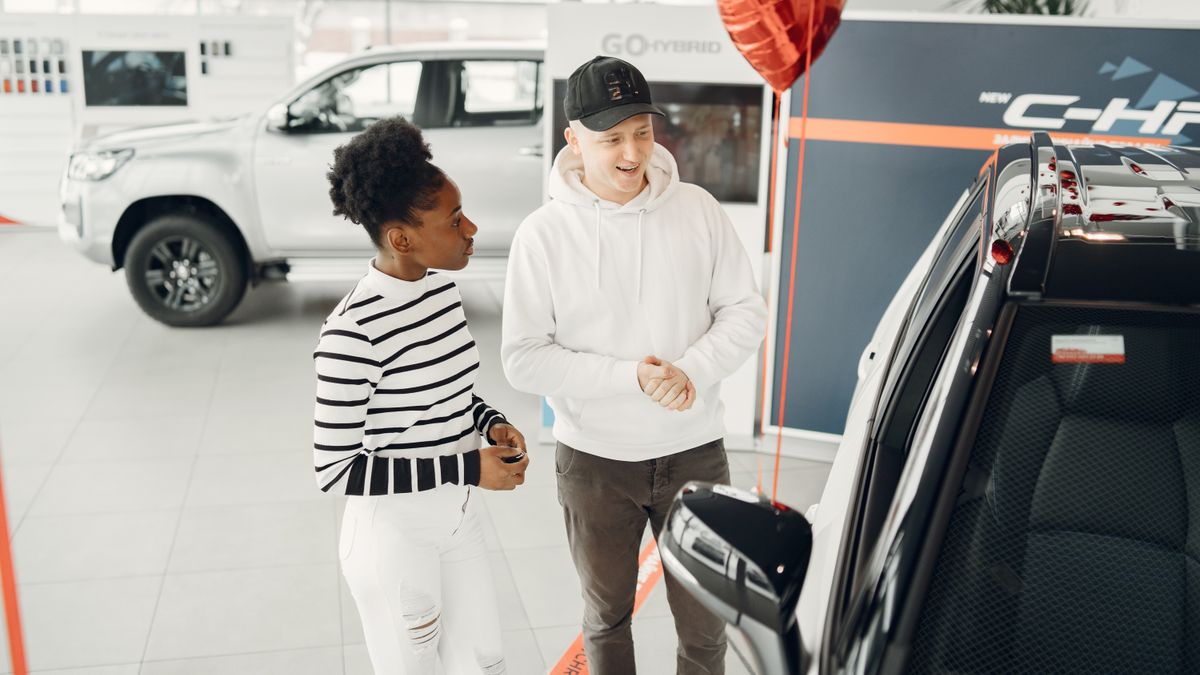
 On screen
Availability
Confirmed: live in Nashville, TN
CETV Now is live in Nashville. Placements are planned by neighborhood, city or venue category, and the right mix depends on your goals, so request a quote for your plan.
Confirmed CETV Now markets: Phoenix, Dallas, Atlanta, Nashville and Salt Lake City. Coming soon: Miami. See the network
If you sell vehicles in the Nashville area, you are advertising to people who may be months from a decision. That makes car dealership advertising in Nashville a timing problem as much as a placement problem. This page covers how to plan an in-venue video campaign here. For the general industry playbook, see the car dealership advertising calendar and the automotive venue page.
CETV Now is a self-install, plug-in digital out-of-home (DOOH) network. A small media player plugs into a screen a venue already owns and runs licensed programming with video ads over live TV. Nashville is one of its five live markets.
Who are you trying to reach in the Nashville metro?
Start with the buyer, not the screen. Most dealerships are talking to a few different groups, and each one needs a different message.
- Active shoppers who are comparing nearby sellers and need a reason to visit yours.
- Early researchers who are months out and are mostly forming a sense of which stores they know.
- Your own service customers, who are already in your lounge and may be thinking about their next vehicle.
- Lease-maturity households, who have a known decision date coming up.
- Used-vehicle and budget-focused shoppers, who respond to inventory and trade-in messages more than to brand ones.
Franchise stores, independents and used-vehicle sellers will weight these groups differently. A franchise store may lean on new model-year arrivals and manufacturer events. An independent lot may lean on inventory freshness and the store's reputation. Financing messages travel with both, but they are the most heavily regulated part of the creative (see the compliance section below).
How should you weigh Davidson County against the surrounding area?
Nashville has had a consolidated city-county government with Davidson County since 1963, so the core county is a natural first unit for planning. It is also commonly called Music City, a major center for the music industry, which means events and visitors shape daily life in some neighborhoods more than others.
For a dealership, the practical question is how far shoppers will drive to buy. Many will cross a county line for a better deal or a specific vehicle. Others will only consider the closest few stores. CETV Now targeting works by neighborhood, city, metro, zip code, sector and individual venue, and it can be layered with audience type and time of day. Two reasonable starting points:
- Close-in plan: target the neighborhoods and zip codes around your store so customers can choose between nearby sellers.
- Metro plan: widen to the metro for a launch, a large inventory event or a conquest-style message, then narrow once you see delivery reports.
Treat visitor-heavy areas with care. People passing through for events may not be car shoppers, so a message tuned for local buyers may be better placed in the neighborhoods where your customers actually live and work. For more on this market, see Nashville digital out-of-home advertising and the Tennessee overview.
Which approved venue categories fit a dealership plan?
CETV Now runs in high-dwell commercial venue categories: auto dealerships, restaurants and bars, medical and dental offices, fitness and wellness facilities, retail, and professional services such as offices and salons. Named venue partners are not published, and CETV Now does not state venue counts for Nashville. Availability for a specific neighborhood or category is confirmed during planning.
In daily life, car shoppers wait in service lounges, finance offices and showrooms, and those same households wait in tire shops, car washes and repair waiting areas. Those are general observations, not a list of CETV Now coverage. When you plan, use only the approved categories above and ask the team what is available in your target area.
| Venue category | Where a dealership message may fit |
|---|---|
| Auto dealerships | Reach people already thinking about a vehicle; useful for inventory, service-to-sales and trade-in messages. |
| Restaurants and bars | A relaxed setting for brand-awareness and local-store messages, especially around weekends and holidays. |
| Fitness and wellness | Regular visitors in a defined neighborhood; works for standing brand messages and seasonal events. |
| Retail | Shoppers already in a buying mindset; works for event-driven offers. |
| Professional services | Offices and salons where people wait; suited to a store-name and neighborhood message. |
CETV Now reports average dwell time of 15+ minutes across its network. That is network data, not third-party audited, and dwell time measures how long people are in a venue, not how closely they watch. See the local DOOH advertising page for how neighborhood targeting works.
When should you run flights?
Because shoppers research over weeks or months, a flight that starts the week of a sale is often late for the early researchers. Plan backward from your peak. The guide to planning a seasonal campaign backward walks through the method. For a dealership, these are the usual anchor points:
- New model-year arrivals: a brand message and a specific arrival message as vehicles reach the lot, then clearance messaging on outgoing inventory.
- Holiday and year-end sales events: short, dated creative; start the standing brand message earlier.
- Tax-refund season: shoppers may be thinking about down payments, so a message about visiting and browsing is easier to keep compliant than one about specific terms.
- Lease maturities: a steady message in the months leading up to when your customers' leases end, with an invitation to talk early.
There are no minimums for CETV Now ad insertion, and no long-term commitment. You set spend and schedule and scale at your own pace, so you can run a short event flight and a lighter always-on message side by side. CETV Now has not published a minimum flight length or launch lead times, so ask the team how far ahead to submit creative, which goes through review before it runs.
What should the creative say?
CETV Now ad formats include full-screen video, static creative, multi-spot branded campaigns and local offers. Full-screen video runs as an unskippable takeover of the venue's live TV, and creative can be a 30-second video, static designs, or animated motion graphics shown as overlays. See ad formats for the options.
- One vehicle or one event per 30-second video. A video about a truck and a sales event and a service coupon says nothing clearly.
- Static or overlay creative for dated events. A holiday sale with an end date is easier to update as a static design than to re-edit as video.
- Pair a monthly inventory message with a standing brand message. The first gives a reason to act now, the second builds familiarity.
- Show the store name and neighborhood. Customers choose between nearby sellers, so they need to know where you are.
- Keep payment details off the screen. Rooms are noisy and viewers are not close enough to read fine print.
Design for sound off, since many venue screens run without audio. The creative mistakes guide and the sound-off video guide cover this in more detail.
What about pricing, financing and compliance?
Keeping specific payment and rate terms off the screen is a creative choice and also reduces how much you have to disclose in a brief spot. A safer on-screen message may point people to your showroom, website or phone line for terms. Whatever you choose, your compliance reviewer should sign off before submission. CETV Now also reviews creative before it runs and places ads in curated venue categories.
How do you measure and start?
Delivery is tracked and reported against CETV Now network data, with venue-level impression reporting, real-time statistics and 24/7 campaign monitoring. Results vary by campaign. CETV Now reported a 4.2x average campaign ROI and 98% viewer recall across its network; these are reported figures, results vary and no outcome is guaranteed.
Delivery reports do not show a car sold. Pair them with your own signals, such as showroom visit sources, call tracking and branded search. See how to measure without clicks and the attribution glossary entry.
- 01
Pick your goal and area
Decide whether this flight is about a launch, an event, service-to-sales or standing brand awareness, and which neighborhoods or zip codes matter.
- 02
Choose venue categories
Select from the approved categories and ask what is available near your store.
- 03
Build the creative
One vehicle or event per video, store name and neighborhood visible, payment terms off the screen.
- 04
Run a compliance check
Review with your own team and your manufacturer's requirements.
- 05
Request a quote
Share your markets, venue categories, creative and budget. CETV Now maps the plan to real-world audiences, provides a quote and gets the campaign live. Pricing is quote-based; call (833) 807-1500 or email info@cetvnow.com.
Dealers with a multi-store group or a franchise can let each location target its own nearby venues while following national brand standards. Agencies can plan across markets through one partner and add a video-first channel to a media mix. Learn more on the advertisers page.
Figures reflect CETV Now network data and are provided for informational purposes. Individual campaign results vary; no specific outcome is guaranteed.