
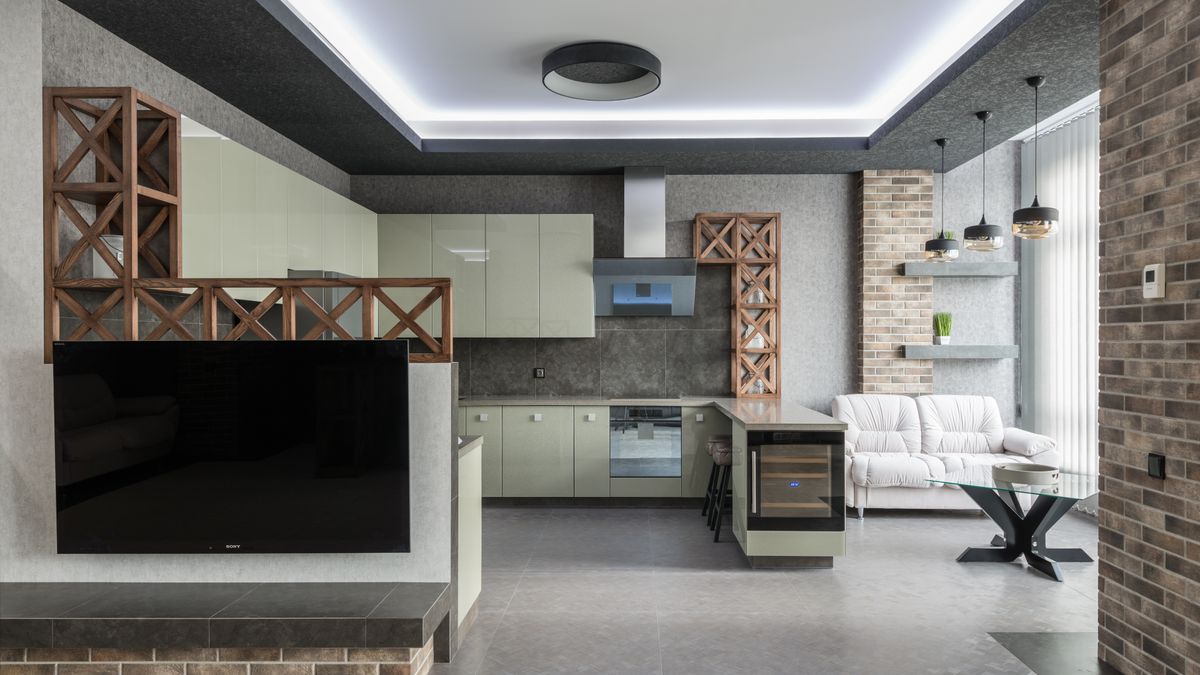
 On screen
A kitchen or bath remodel is not an impulse purchase. The homeowner spends weeks or months thinking, collects ideas, talks to a few companies, and eventually puts down a significant deposit. Good home remodeling advertising ideas start from that reality: your ad does not need to close anything. It needs to make your company familiar and credible so that you are one of the names considered when the homeowner finally picks up the phone.
This playbook covers how a remodeling or design-build company can plan in-venue video on CETV Now, a self-install, plug-in digital out-of-home (DOOH) advertising network. Digital out-of-home means video and static ads shown on screens in public and commercial places rather than on a phone or a roadside billboard.
What should advertising do for a long-consideration purchase?
Think of the remodeling decision in three stages: a homeowner starts noticing problems or ideas, builds a short list, then contacts the companies on it. Ads are most useful in the first two stages. By the time the calls begin, the list is mostly set.
- Stay present. One viewing rarely moves a person. Repeated, consistent exposure over weeks builds the familiarity that makes your name feel like a safe choice.
- Build trust. Show real work, real people and a real showroom, not stock imagery.
- Offer a low-pressure next step. A design consultation or showroom visit is easier to say yes to than a quote request, and it is where your design process does the selling.
No ad format makes a homeowner decide faster, and no outcome is guaranteed. The practical goal is a steady presence that supports your phone calls, your website and your referrals.
Who are you trying to reach, and where are they?
Your target is usually a homeowner in your service area who is considering a project in the next several months. Many remodelers also care about a specific neighborhood type, such as older homes in established areas where kitchens and baths are due for updates. Those are planning choices you make, not claims about any venue audience.
In daily life, homeowners spend time in restaurants, gyms, service lounges, offices and appointment waiting rooms. These are general observations, not CETV Now coverage data. CETV Now reports average dwell time of 15+ minutes across its network (network data, not third-party audited). Dwell time is how long people spend in a venue, not a measure of attention, so plan your creative to be understood quickly.
Venue categories that fit a remodeling message
CETV Now runs in auto dealerships, restaurants and bars, medical and dental offices, fitness and wellness facilities, retail, and professional services such as offices and salons. For remodelers, a sensible starting shortlist looks like this:
| Venue category | Why it may fit | Creative angle |
|---|---|---|
| Restaurants and bars | People are seated and often talking about home and hosting. | Kitchen and entertaining spaces; unhurried tone. |
| Fitness and wellness facilities | Members tend to visit repeatedly, so you can stay present over weeks. | Primary bath and spa-style bathroom projects. |
| Professional services and offices, salons | Local, repeat visitors who may have time to watch. | Design-build team and consultation step. |
| Medical and dental offices | Local appointment visitors in a waiting setting. | Showroom visit and team introduction. |
| Auto dealerships | Service lounges hold people who are waiting on a vehicle. | Short project reel with a clear next step. |
Treat the table as a hypothesis to test, not a ranking. Which categories reach your buyers depends on your service area and project type. Placements run in curated venue categories, and creative is submitted for review before it runs.
How do you target a service area?
Remodelers rarely want to pay for reach outside the area they can serve. CETV Now targeting works by neighborhood, city, metro, zip code, sector or vertical, and individual venue. It can be layered with audience type and time of day. If your crews work within a set drive of your showroom, start with the zip codes inside that radius.
Market availability matters. CETV Now is live in Phoenix, Dallas, Atlanta, Nashville and Salt Lake City, and Miami is coming soon. If you work somewhere else, availability is unconfirmed, so send an inquiry rather than assuming coverage. You can read more on the pages for Phoenix, Dallas, Atlanta, Nashville and Salt Lake City.
What should the ad say?
Keep the message unhurried and specific. The homeowner is not ready to buy, so skip urgency and discount language. Show competence and make the next step easy.
- 01
Open with a real project
Use a before-and-after or a finished kitchen or bath photo from your own work. Get the homeowner's permission before using their home, and keep identifying details such as street numbers out of frame.
- 02
Name the design consultation
Say plainly what happens: you meet, look at the space, talk through ideas and priorities. Naming the step makes it feel concrete and low pressure.
- 03
Show the team and the showroom
A face and a room people can visit lower the risk of calling a stranger. A short shot of the showroom tells viewers where the visit would happen.
- 04
Close with one contact route
Use a phone number and your business name large enough to read from across a room. A QR code can help if it leads to a consultation booking page, but see when QR codes on venue screens help and when they do not.
What to avoid
- Price claims. Remodel costs vary with scope and finishes, and a number on a screen invites the wrong comparison. Let the consultation handle cost.
- Crowded layouts. One project, one message, one contact route.
- Imagery you lack permission to use. Only use project photos you have the right to show.
- Promises about timelines or results you cannot back up.
For more on offer design, see how to design a local offer ad for an in-venue screen.
How does seasonality shape the plan?
Spring and summer are the main project season, and many homeowners start planning earlier than they call. Fall brings pre-holiday projects, as people think about hosting and want a kitchen or bath finished before guests arrive. Because the decision takes weeks, a good rule is to begin your presence before the season you want to be busy, not at its start.
Ad insertion on CETV Now has no minimums and no long-term commitment, so you set your own spend and schedule and can scale at your own pace. That makes a phased plan practical: a lighter presence in slower months, a larger one ahead of spring, and a fall push for holiday projects. For the broader approach, see seasonal advertising for home service companies and the annual in-venue advertising calendar.
How do you tell whether it is working?
Delivery is tracked and reported against CETV Now network data, with venue-level impression reporting, real-time statistics and 24/7 campaign monitoring. Results vary by campaign. CETV Now also reports a 4.2x average campaign ROI and 98% viewer recall across its network. These are CETV Now reported figures, not third-party audited, and your results may differ.
For a long-consideration purchase, expect the signal to show up indirectly: more branded searches, consultation requests that mention seeing you, and calls from the zip codes you targeted. Ask every new lead how they heard about you and log the answer. Read more about measuring without clicks and attribution.
How does this fit with your other marketing?
In-venue video works best as one part of a media mix. Search catches people who are ready to hire; video builds the name they search for. Review how to coordinate DOOH with search and social, and compare roles against direct mail if that is part of your current spend.
Nearby trades face similar planning questions. See the playbooks for roofing contractors, HVAC contractors and plumbing and electrical companies.
What do you need to start a campaign?
To start, share your markets, venue categories, creative and budget. CETV Now maps the plan to real-world audiences, provides a quote, and gets the campaign live. Pricing is quote-based and depends on market, venue category and schedule, and there is no published rate card. Before you request a quote, gather three or four real project photos, your service-area zip codes, your consultation offer and your license number. You can also review ad formats and how it works, or contact the team at (833) 807-1500 or info@cetvnow.com.
Figures reflect CETV Now network data and are provided for informational purposes. Individual campaign results vary; no specific outcome is guaranteed.