
 On screen
Heating and cooling is a weather business. Demand arrives in spikes, and by the time the first heat wave or hard freeze hits, homeowners are calling whoever answers first. That makes hvac contractor advertising a timing problem more than a reach problem. The goal is to be a name a homeowner already knows before the phone calls start.
This playbook shows how a contractor can plan in-venue video on CETV Now: who to reach, which venue categories fit, what to say and what to offer. It is a planning guide, not a promise of results. No outcome is guaranteed, and CETV Now has not published campaign timing on this page, so ask the team for current timing when you plan.
Why lead time matters more than reach for HVAC
At peak, every competitor is booked and every customer is in a hurry. Emergency calls go to the company that is top of mind or first in search. Advertising in the middle of a heat wave mostly competes for people who have already picked someone.
The calmer window is the shoulder season. Spring, before cooling season, and early fall, before heating season, are when a homeowner can still think about a tune-up. A maintenance plan is an easier conversation then because nothing is broken yet. For more on this idea, see what seasonality means in advertising and how to plan a seasonal campaign backward from the peak.
Who you are trying to reach
Your buyer is usually a homeowner in your service area, often the person who decides about household repairs and upkeep. You are not looking for everyone. You are looking for people who live within your technicians' drive time and who might own a system that needs service.
CETV Now targeting can be set by neighborhood, city, metro, zip code, sector or vertical, and individual venue, and layered with audience type and time of day. For a contractor, that means you can build the plan around your actual service territory instead of an entire metro. The advertisers page covers the basics of planning a campaign.
Which venue categories fit a heating and cooling company
CETV Now runs in high-dwell commercial venue categories: auto dealerships, restaurants and bars, medical and dental offices, fitness and wellness facilities, retail, and professional services such as offices and salons. CETV Now reports average dwell time of 15+ minutes across its network. Dwell time is how long people spend in a venue. It is not a measure of attention.
In everyday life, homeowners spend time in service lounges, restaurants, gyms and salons. That is a general observation about daily routines, not a statement about any specific venue. Within the approved categories, these are reasonable places to start:
| Venue category | Why it may fit | Message to lead with |
|---|---|---|
| Auto dealerships | Visitors may be seated for a while, such as in a service waiting area | Maintenance plan and a named local technician |
| Restaurants and bars | Dining customers are often local | Seasonal tune-up reminder with your local name |
| Fitness and wellness facilities | Regular visitors who often live nearby | Tune-up offer before the season changes |
| Salons and other professional services | Seated visitors who often return | Maintenance plan with a simple next step |
| Medical and dental offices | Waiting rooms with local visitors | Plain, reassuring brand and phone number |
Medical and dental offices are a sensitive context. Placements run in curated venue categories and creative is reviewed, so keep the tone plain and non-alarmist there. The same goes for any room: a calm, helpful message reads better than a scare line about a broken furnace.
What to say in each season
Seasonality should set the message. One generic ad all year wastes the timing advantage.
- Spring and early fall (shoulder seasons): tune-ups and maintenance plans. The tone is planning ahead, not panic.
- Peak heat or cold: emergency availability and a phone number people can remember. Keep it short.
- Between seasons: brand and local trust. Show the technician and the van so people recognize both on the street.
- Weather-timed moments: a short animated overlay on live TV can carry a timely line about an incoming heat wave or cold front.
Ad formats include full-screen video, static creative, multi-spot branded campaigns and local offers. Full-screen video runs as an unskippable takeover of the venue's live TV, and creative can be a 30-second video, static designs, or animated motion graphics shown as overlays. CETV Now has not confirmed other creative specifications here, so check them with the team before production. Details are on the ad formats page.
What to offer and what to show
A person watching a screen in a salon cannot book a service call on the spot. Give them one easy action they can remember or take later.
- 01
Show the real people and the van
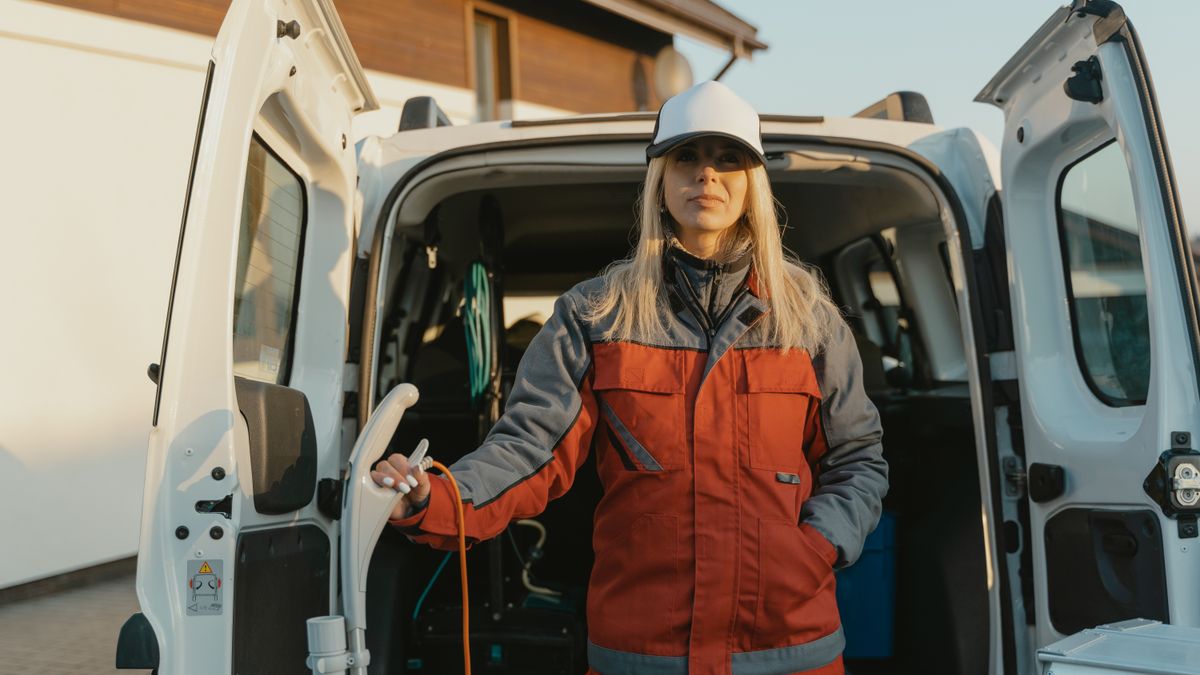
A technician in uniform, your truck and your local business name build recognition. When the AC fails later, a familiar name helps.
- 02
Lead with the maintenance plan
Name the offer plainly: a seasonal tune-up or an annual plan. Keep the details short enough to read in a few seconds.
- 03
Make the response simple
A phone number people can remember often works for service businesses. A QR code can help in some rooms; see how QR codes work in out-of-home advertising before you decide.
- 04
Design for sound off
Screens in public venues often show live TV with the sound low or off, so put the offer in text on screen and do not rely on a voiceover to carry it.
- 05
Qualify any savings claim
If you mention savings, state the conditions plainly, such as which systems or dates apply, and avoid promising a specific dollar amount for every home.
Compliance to check before you run
Check your own rules before submitting creative. Many places have licensing-display rules for contractors, so confirm what must appear in your advertising. Energy-savings and rebate claims may also be subject to manufacturer and utility program rules. This is general information, not legal advice, and requirements vary by location.
Where this can run today
CETV Now is live in five markets: Phoenix, Dallas, Atlanta, Nashville and Salt Lake City. Miami is coming soon and not live yet. For any other city or state, availability is unconfirmed, so send an inquiry. Start with the market page that matches your territory: Phoenix, Dallas, Atlanta, Nashville or Salt Lake City.
How to size and measure a first plan
Ad insertion has no minimums and no long-term commitment, so you can set your spend and schedule, start with a limited territory and scale at your own pace. Pricing is quote-based and depends on market, venue category and schedule. There is no published rate card, so read how to budget when there is no rate card.
Delivery is tracked with venue-level impression reporting, real-time statistics and 24/7 campaign monitoring. CETV Now reported a 4.2x average campaign ROI and 98% viewer recall across its network. Those are CETV Now figures, not third-party audited, and individual results vary. To judge your own campaign, track calls and plan sign-ups, and ask new customers how they heard about you; attribution explains the limits.
To get started, share your markets, venue categories, creative and budget. CETV Now maps the plan to real-world audiences, provides a quote and gets the campaign live. Weather-driven businesses can also read how to build a weather-based advertising strategy and the DOOH campaign planning checklist. Related trades: plumbing and electrical advertising.
Figures reflect CETV Now network data and are provided for informational purposes. Individual campaign results vary; no specific outcome is guaranteed.