
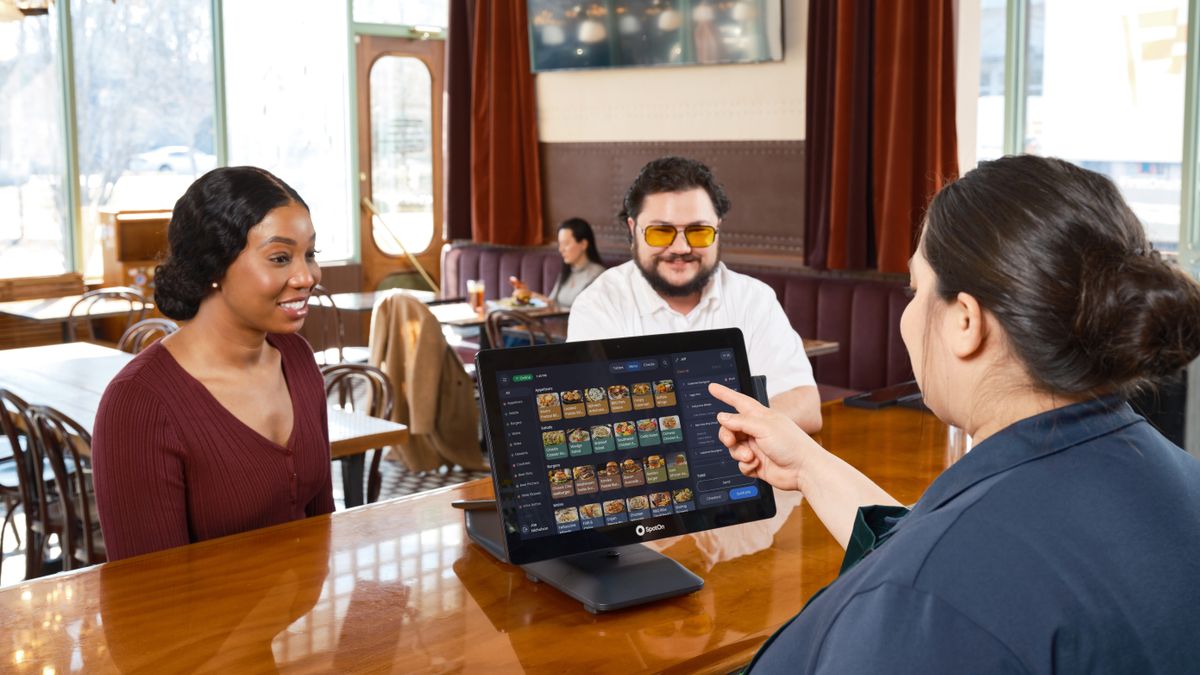
 On screen
Availability
Confirmed: live in Atlanta, GA
CETV Now is live in Atlanta. Placements are planned by neighborhood, city or venue category, and the right mix depends on your goals, so request a quote for your plan.
Confirmed CETV Now markets: Phoenix, Dallas, Atlanta, Nashville and Salt Lake City. Coming soon: Miami. See the network
Atlanta at a glance for advertisers
Atlanta is one of five markets where CETV Now is live, alongside Phoenix, Dallas, Nashville and Salt Lake City. CETV Now is a self-install digital out-of-home (DOOH) network: a small media-player device plugs into a screen a venue already owns and runs licensed programming with video ads over live TV.
For an advertiser, that means your message appears in commercial venues where people are already waiting, watching and deciding. If DOOH is new to you, the plain-English DOOH guide covers the basics before you plan.
This page does not state venue counts, audience size or named partners for Atlanta, because none are approved for publication. What it can do is help you decide where in the metro to aim and what to bring to a quote request.
A metro that spreads across dozens of counties
Metro Atlanta spreads across dozens of counties, with the city of Atlanta as its economic, cultural and demographic center. Large suburban cities in the metro include Sandy Springs, Roswell, Alpharetta and Marietta. For background on the region, see Metro Atlanta on Wikipedia.
That spread creates the core planning question. A single "Atlanta" buy can mean very different things depending on whether you want the urban center or a suburban city farther out. People in a large metro often live, work and shop in different places, so a plan built around one pin on a map can miss where your customers actually are.
CETV Now targeting is both micro and macro: by neighborhood, city, metro, zip code, sector or vertical, and individual venue. It can be layered with audience type and time of day (daypart). That range lets you pick the level that fits your business instead of buying the whole metro by default.
City or suburbs: how to decide
Start with your trade area, meaning the geography your customers realistically travel from. Pull your own data: customer zip codes, your delivery or service radius, and where your best customers live and work. Then compare the two approaches.
| Question | Lean toward the city | Lean toward suburban cities |
|---|---|---|
| Where do customers come from? | Many neighborhoods, drawn to one central location | One suburb or a cluster of nearby suburban cities |
| What kind of business? | A destination business, or one that serves people who travel in | A neighborhood business with a defined service radius |
| How many locations? | One or two central sites | Several sites spread across the metro, or a franchise |
| How do you want to scale? | Build concentration in a few neighborhoods | Start with one area, then add others |
You can also combine both. A franchise brand can let each location target its own nearby venues while following national brand standards. A single-location business might start near its home base and add the city center later.
For a broader view of sizing, read local vs regional vs national DOOH planning. Dallas is another large metro with its own planning questions, covered in the Dallas submarket guide.
Match venue categories to your trade area
Once you know the geography, choose the venue categories. CETV Now runs in high-dwell commercial venue categories: auto dealerships, restaurants and bars, medical and dental offices, fitness and wellness facilities, retail, and professional services such as offices and salons. Which categories are available in a given part of Atlanta is something to confirm in your quote.
A practical way to choose is to ask where your customer is when they might act on your offer, and which of these places they already visit within your trade area. Then check the shortlist against the geography.
- Offer tied to a visit: if your message depends on a nearby purchase, favor categories your customers pass through close to you.
- Repeat services: if people return often, such as for appointments, categories they visit on a routine may fit.
- One-time or seasonal promotions: a narrower geography and a short schedule can keep the test simple.
- Brand awareness across the metro: a wider geography may fit, but plan your reach and frequency deliberately.
CETV Now reports average dwell time of 15+ minutes across its network. That is CETV Now network data, not third-party audited, and dwell time measures how long people are in a venue, not how closely they watch. Read what dwell time means before using it in a plan. For help narrowing categories, see how to choose venue categories.
Creative and timing considerations
Formats include full-screen video, static creative, multi-spot branded campaigns and local offers. Full-screen video runs as an unskippable takeover of the venue's live TV. Creative can be a 30-second video, static designs, or animated motion graphics shown as overlays on live TV. See ad formats for the options.
Geography should shape the message. A campaign aimed at one area can name the neighborhood or city and carry a specific local offer. A metro-wide campaign usually needs a simpler, broader message. In both cases, keep the call to action short and easy to remember. The video ad design guide covers practical principles.
Daypart targeting lets you layer time of day onto the geography. A breakfast spot might favor mornings, while a dinner-focused restaurant might favor evenings. Creative specifications and review timing are not covered on this page, so ask the team before you finalize assets.
Set a goal before you buy so you know what success means; the campaign goals guide can help. CETV Now reported a 4.2x average campaign ROI and 98% viewer recall across its network, but individual campaign results vary and no outcome is guaranteed.
How to request an Atlanta quote
Pricing is quote-based and depends on market, venue category and schedule. There is no published rate card. Ad insertion has no minimums and no long-term commitment, so you set your spend and schedule and scale at your own pace.
- 01
Define your trade area
List the zip codes, neighborhoods or cities where your customers live, work or travel.
- 02
Choose city, suburbs or both
Decide whether to concentrate on the center, focus on a suburban area, or test one and expand. Ask the team what is available in the areas you name.
- 03
Pick venue categories
Select the categories that fit your offer and the moment you want to reach people.
- 04
Prepare creative and a budget
Share your creative and the spend you are considering. Creative is submitted for review before it runs.
- 05
Send the inquiry
Contact CETV Now at (833) 807-1500 or info@cetvnow.com, or use the contact page. The team maps your plan to real-world audiences, provides a quote, and gets the campaign live.
Delivery is tracked against CETV Now network data, with venue-level impression reporting and real-time statistics. Results vary by campaign. For the full process, see ad insertion, the campaign planning checklist and the advertiser overview. If you also advertise in Arizona, compare with Phoenix.
Figures reflect CETV Now network data and are provided for informational purposes. Individual campaign results vary; no specific outcome is guaranteed.