
 On screen
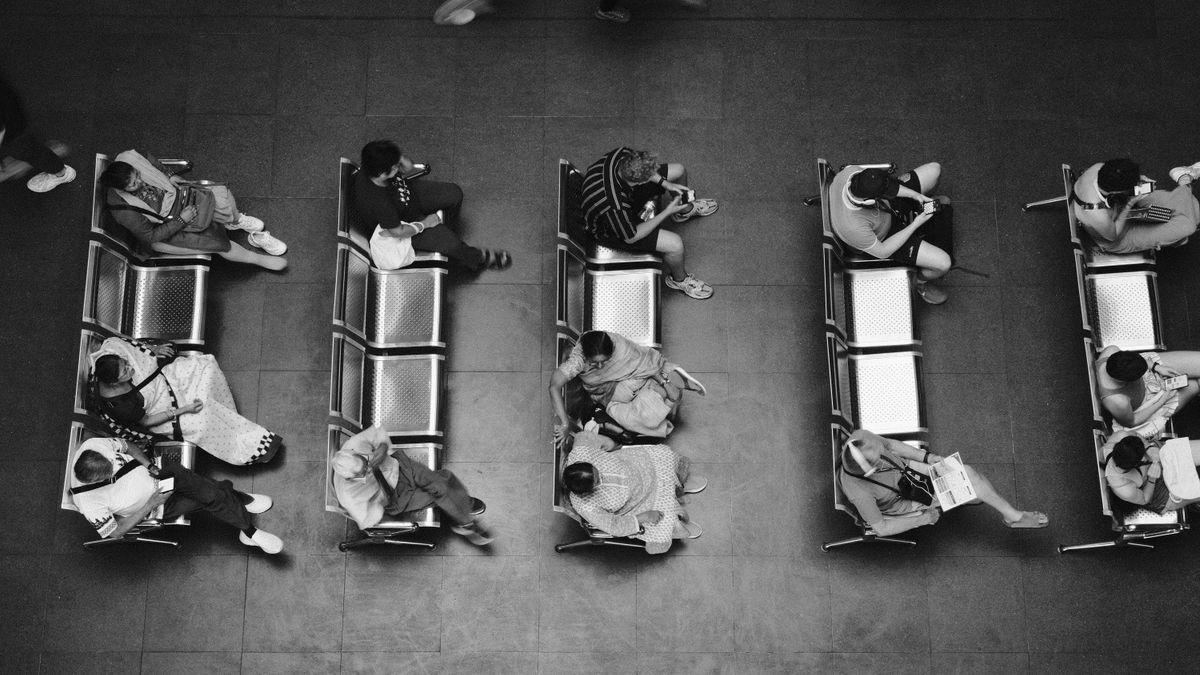
If you are deciding where to spend on in-venue screens, it helps to picture what the room actually looks like. Nobody in a waiting area is sitting in a theater seat. They are doing something else, and the screen on the wall gets looked at in between. This post walks through the common waiting moments and what each one means for your creative.
It is a qualitative tour, not a study. It cites no statistics, because behavior varies by venue, time of day and who is in the room. Treat it as a set of planning assumptions you can check against your own campaign.
Why waiting is a different viewing context
Waiting is time with nothing required of you. That makes people open to being entertained or informed, which is why venue-based media tends to sit where people wait, watch and decide. CETV Now describes its positioning as precision video advertising for the real world, reaching people in venues customers already visit.
But open is not the same as focused. This is often called lean-back viewing: relaxed, low-effort, with attention drifting in and out. A screen in that setting works more like a billboard you can sit near than a video you chose to play. For a closer look at the term people often use for this, see captive audience, and note that being in the room does not mean looking at the screen.
Five waiting moments and what each means for creative
Scrolling a phone
This is the most common habit in nearly any waiting area, and it is the main competitor to your ad. A person looking down at a phone is not watching the TV, but they often look up when something changes on screen, when a name is called, or when the room gets louder.
What it implies: you will often get the glance after the first moment, not before it. Open with the offer or the brand, not a slow lead-in. If the first second is a logo fade, the glance may be over before the message starts.
Talking with a companion
People waiting together talk to each other: a parent and teenager at a dentist, coworkers at a dealership, friends before a table is ready. Conversation fills the audio space and often makes the TV a background element.
What it implies: do not depend on sound. Anything the viewer needs to understand should be readable on screen. Captions, short phrases and clear visuals carry the message if the room is noisy or the volume is low. Our post on making video ads work with the sound off goes deeper on this.
Supervising children
A parent with kids in a salon, a restaurant or a medical office is watching the children first and everything else second. Their glances at the screen are short and frequently interrupted.
What it implies: one idea per ad. A message that needs three sentences of setup will be lost. Keep the call to action simple enough to be remembered after an interruption, such as a business name and a single offer.
Watching the room
Some people just look around: at the door, the front desk, other customers, the clock. Their eyes pass over the screen along with everything else, and motion or bright contrast is what pulls the eye in.
What it implies: legibility from across the room. Large type, high contrast, and a short headline do more than detailed layouts. If you have to squint at it from the far chairs, it will not be read.
Actually watching the TV
Some people do settle in, especially when sports, news or other programming is on. CETV Now runs licensed programming such as sports, news, lifestyle and nature content, with ads inserted into it. People who are following the programming may look at the screen longer, but you cannot count on it for every viewer.
What it implies: build for the least attentive viewer and the most attentive viewer will still get the message. A creative that works as a glance usually also works for a longer look.
Dwell time is not attention
CETV Now reports average dwell time of 15+ minutes across its network. This is CETV Now network data, not third-party audited. Dwell time measures how long people spend in a venue. It does not measure how much of that time they spend looking at a screen.
The gap matters when you plan. Fifteen minutes in a chair might include a phone call, a conversation, a check-in, and a long stretch of looking at nothing in particular. Longer dwell can give a message more chances to be seen across the visit, which is a reason to think about frequency and creative variety, but it does not promise any particular level of attention.
Industry measurement guidance, such as the IAB's Digital Out-of-Home Measurement Guide, treats dwell time, engagement and attention as separate audience metrics, and distinguishes impression types such as Opportunity to See and Likelihood to See. That separation is a useful habit even if you never read the guide: ask which of those a number actually represents.
How behavior shifts by venue
CETV Now runs in venue categories such as auto dealerships, restaurants and bars, medical and dental offices, fitness and wellness facilities, retail, and professional services such as offices and salons. Waiting looks different in each, and CETV Now has not published venue-by-venue behavior data, so the table below is a set of reasonable planning hypotheses, not findings.
| Venue | Likely waiting mode | Creative lean |
|---|---|---|
| Medical or dental office | Quiet, phone-heavy, sometimes anxious | Calm, simple, readable; check compliance rules if you are a regulated advertiser |
| Restaurant or bar | Talking, scanning the room, watching sports | Short offers, large type, a clear tie to the moment such as a drink or dessert |
| Auto dealership or service area | Longer waits, mix of phone and TV | A single next step the customer can act on while they are there |
| Fitness facility | Brief pauses between activity | Very short, high-contrast messages |
| Salon or professional office | Relaxed, often browsing a phone | Clear brand and a single local offer |
Use these as a starting point and refine as you see how your own campaign performs. For more on connecting audience to venue, read how to match your audience to venue moments and how to choose venue categories.
A creative checklist for people who are half-watching
- Make the first second count. Show the offer, product or business name immediately.
- Use large type. Aim for a headline readable from the far side of the room and limit the number of words.
- Do not rely on sound. Make the message complete without audio.
- One idea per ad. A single offer or single message holds up better to interruptions.
- Use motion with purpose. Movement draws a glance; clutter makes it harder to read.
- Name the next step plainly. A business name, a neighborhood, or a short offer is easier to recall than a long URL.
- Match the venue. A message that fits the moment, such as a service offer in a service lounge, feels relevant instead of random.
CETV Now supports full-screen video (an unskippable takeover of the venue's live TV), static designs, and animated motion graphics shown as overlays on live TV. Creative can be a 30-second video. See ad formats to understand which fits your message. Creative is reviewed before it runs. CETV Now has not published detailed creative specifications here, so ask the team before you build assets.
What CETV Now reports, and how to read it
CETV Now reports 98% viewer recall and a 4.2x average campaign ROI. Both are CETV Now reported figures, individual campaign results vary, and no outcome is guaranteed. Use them as context, not a forecast, and look at what you can check yourself: delivery reporting, venue-level impressions, and signals such as calls, visits or branded search. For the limits of delivery data, see audience measurement and impressions.
Targeting can be by neighborhood, city, metro, zip code, sector and individual venue, and layered with audience type and daypart. That lets you test whether a creative suits a given waiting moment. Ad insertion has no minimums and no long-term commitment, so a small test is possible. The small DOOH test campaign guide walks through one.
Planning your campaign around the waiting moment
Start with the venue and the mindset of the person in it, then write the creative for a glance. Share your markets, venue categories, creative and budget, and CETV Now maps the plan to real-world audiences and provides a quote. Pricing is quote-based, with no published rate card. The live markets are Phoenix, Dallas, Atlanta, Nashville and Salt Lake City, with Miami coming soon; for anywhere else, availability is unconfirmed, so send an inquiry.
If you want a structured way to work through the decisions, use the campaign planning checklist, or see the advertiser overview to start a plan.
Figures reflect CETV Now network data and are provided for informational purposes. Individual campaign results vary; no specific outcome is guaranteed.