
 On screen
Why moments beat demographics alone
You probably know your customer well: age range, neighborhood, what they buy, what they worry about. What that profile does not tell you is where a screen could meet them in a receptive frame of mind. A 40-year-old homeowner is a different audience in a service lounge than at a gym front desk, even though she is the same person.
That is the idea behind venue context advertising: the setting shapes how a message lands. CETV Now describes its approach as precision video advertising for the real world, reaching people while they wait, watch and decide in venues customers already visit. This guide turns that into a planning tool you can use before you ask for a quote.
Four kinds of venue moments
CETV Now runs in high-dwell commercial venue categories: auto dealerships, restaurants and bars, medical and dental offices, fitness and wellness facilities, retail, and professional services such as offices and salons. Each can be read as a moment your customer is already in.
| Moment | What the customer is doing | Approved venue categories that often fit | Message job |
|---|---|---|---|
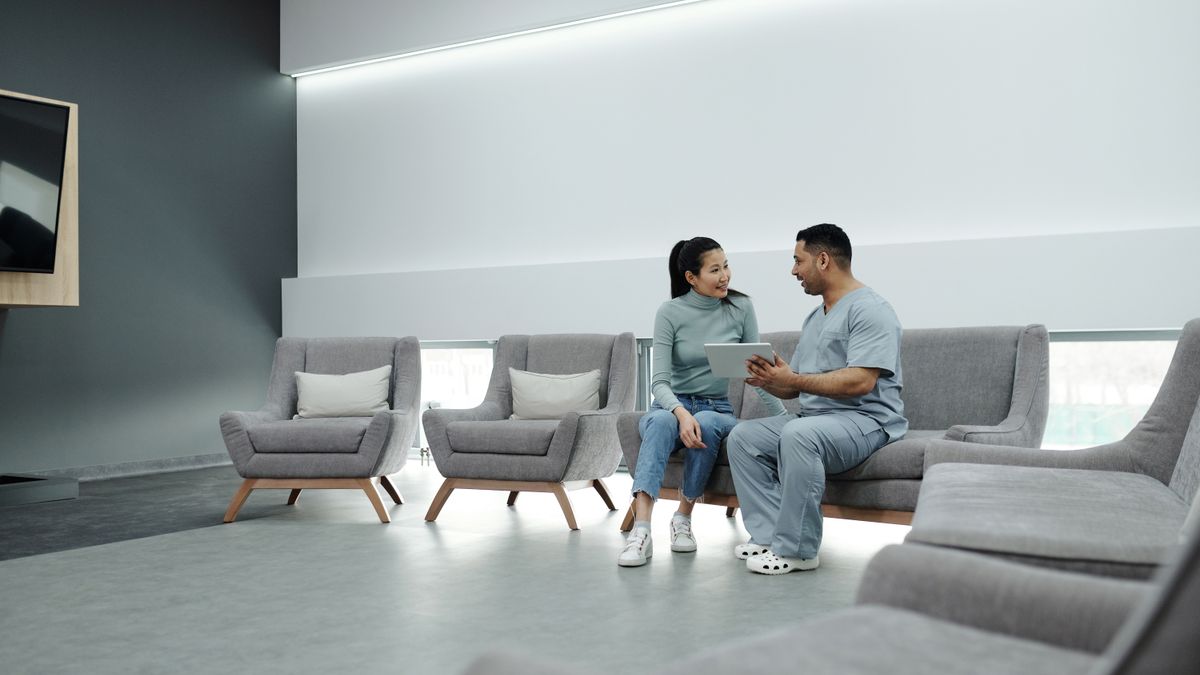
| Waiting | Sitting through an appointment or a service visit | Medical and dental offices, auto dealerships (service visits), salons and offices | Introduce, inform, offer something useful for later |
| Relaxing | Eating, drinking, socializing, watching live TV | Restaurants and bars | Invite, tempt, promote a nearby or time-bound offer |
| Focused | Working out, with attention on the activity | Fitness and wellness facilities | One simple idea, brand familiarity |
| Deciding | Browsing and comparing before buying | Retail | Prompt a choice, highlight an offer or product |
Some venues straddle two moments. A salon visit can be a wait and a relaxed stretch. A dealership can be a service wait or a decision about a new vehicle. Treat the table as a starting point and note where your customer might fit two columns.
What each moment is good for
Waiting: time to take in more than a headline
People waiting for an appointment or a vehicle often have time on their hands. CETV Now reports average dwell time of 15+ minutes across its network. That figure comes from CETV Now network data and is not third-party audited. It also measures how long people are in a venue, not how closely they watch. See the dwell time glossary entry for the difference.
Waiting moments suit messages that need a little explanation: a new service, a seasonal offer, a reason to book. Our page on promotion ideas for drivers who are waiting shows how that works in a service lane.
Relaxing: good for invitations and time-bound offers
In a restaurant or bar, people are usually settled in and the live TV is part of the atmosphere. Offers tied to a window, such as a happy hour or a weekend event, can fit naturally. For ideas, read about planning video around a happy hour window.
Focused: keep it simple
During a workout, attention is on the activity. A glance at a screen is more likely than a long look, so a focused-moment message should carry one idea: a name, a benefit, a place. It is a reasonable setting for building familiarity with local brands, though how much any viewer notices will vary.
Deciding: closest to the purchase
Retail is where the customer is already weighing options. Messages that name a product, an offer or a reason to choose you have a clear job here. The retail promotion calendar for in-venue video covers how to time those offers.
A worked hypothetical: two businesses, two maps
Both businesses below are invented for illustration. They are not CETV Now advertisers, and nothing here predicts results.
Business A: a mobile car-detailing company
The customer is a car owner who values convenience and has a vehicle that needs care. The owner is often waiting in a place connected to their car. The strongest moment is waiting, in auto dealership service visits. A secondary moment is relaxing in restaurants, where a weekend detailing offer could land when people are planning their days.
Message: a clear service description, a local offer and one way to respond. Format: a 30-second video can carry a short demonstration, or a static design with a local offer. Targeting: the zip codes the company serves, plus the dealership venues in them.
Business B: a meal-prep subscription
The customer is a health-minded adult with a busy schedule. The strongest moment is focused, in fitness and wellness facilities, where the message is about routine. A second moment is deciding, in retail, where a trial offer could sit near shopping decisions. Restaurants are a weaker fit because the customer is already eating.
Message: one idea, repeated simply, such as the name and a single benefit, with a trial offer for the retail moment. Targeting: neighborhoods near the kitchen's delivery area, layered with time of day to match when people tend to work out.
| Business A | Business B | |
|---|---|---|
| Primary moment | Waiting | Focused |
| Secondary moment | Relaxing | Deciding |
| Message style | Explain and offer | Simple and repeatable |
| Venue categories to ask about | Auto dealerships, restaurants and bars | Fitness and wellness, retail |
Choosing messages by moment
CETV Now ad formats include full-screen video, static creative, multi-spot branded campaigns and local offers. Full-screen video runs as an unskippable takeover of the venue's live TV, and creative can be a 30-second video, static designs or animated motion graphics shown as overlays on live TV. Read the ad formats overview for how each appears.
A practical pairing, as a starting point rather than a rule:
- Waiting: a 30-second video that explains, or a multi-spot campaign that tells a short story across several airings.
- Relaxing: a local offer or motion-graphic overlay tied to a day or time.
- Focused: a simple static or motion design with one idea and a clear brand name.
- Deciding: a product- or offer-led message that makes the choice easier.
If you are unsure which creative type to use, static, motion or video creative walks through the trade-offs, and designing video ads for venue screens covers the craft. Creative is submitted for review before it runs, and placements run in curated venue categories to keep brands in appropriate contexts.
Checking your map with a quote conversation
Your moments map is a hypothesis. A quote conversation is where you test it. To start a campaign, you share your markets, venue categories, creative and budget. CETV Now then maps the plan to real-world audiences, provides a quote and gets the campaign live.
- 01
Write your customer's week
List the places your best customers go in a typical week and what they are doing in each. Mark each as waiting, relaxing, focused or deciding.
- 02
Pick one primary and one secondary moment
Resist covering all four at once. The venue category guide helps you narrow.
- 03
Set a goal for each moment
Awareness, a booking or a visit are different goals. Setting goals for a DOOH campaign can help you decide.
- 04
Define where and when
Targeting can be by neighborhood, city, metro, zip code, sector or vertical, and individual venue, and layered with audience type and daypart. See location, venue and daypart targeting.
- 05
Ask for a quote and start small
Pricing is quote-based and depends on market, venue category and schedule. Ad insertion has no minimums and no long-term commitment, so you set your spend and schedule. The small test campaign guide shows one way to begin.
Delivery is tracked and reported against CETV Now network data, with venue-level impression reporting, real-time statistics and 24/7 campaign monitoring. Results vary by campaign and no outcome is guaranteed. For how to read what comes back, see reading a DOOH delivery report.
On geography, CETV Now is live in Phoenix, Dallas, Atlanta, Nashville and Salt Lake City, and Miami is coming soon but not live. For anywhere else, availability is unconfirmed, so send an inquiry. The advertiser page explains how to get started, and the campaign planning checklist lists what to have ready.
Figures reflect CETV Now network data and are provided for informational purposes. Individual campaign results vary; no specific outcome is guaranteed.