
 On screen
If you run a local business, you probably have a limited budget and two tempting places to put video: a social feed or a screen in a venue your customers already visit. Comparing digital out-of-home (DOOH) with social media video ads on a single scoreboard misleads you, because they do different jobs. This page compares them by what each is for, without naming platforms and without claiming either one performs better.
For the basics of the in-venue side, see What Is DOOH Advertising?. Here, the focus is the decision.
Two different kinds of attention
Social video meets a person who is holding a device and choosing what to look at. They can scroll past in a moment, and the ad competes with everything else in the feed. The person is usually alone with the screen, and the attention is self-directed.
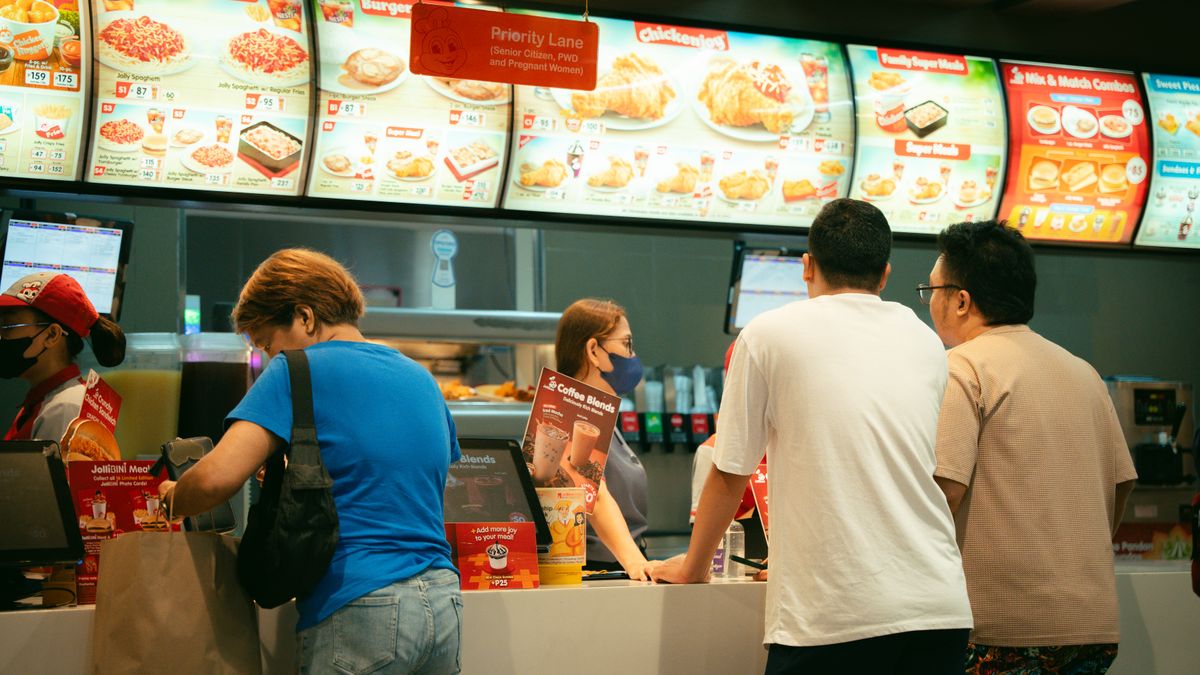
In-venue video meets a person who is already in a place for another reason: waiting for a service appointment, eating, working out, sitting in an office. The screen is part of the room, and the viewer did not pick it as a destination. With CETV Now, full-screen video runs as an unskippable takeover of the venue's live TV, so a viewer who is looking at the screen sees the spot rather than skipping it.
Context: a place vs a feed
The biggest difference is where the message lands. A feed is a general-purpose environment: the viewer might be on a couch, on a commute or in a break room, and your ad sits between personal posts and other ads. A venue is a specific physical setting, and the message arrives next to the thing the person is already doing.
That gives in-venue video a natural fit for decisions tied to a place. A dental office screen can carry a different message than a restaurant bar screen, and a service lounge can carry a different one again. CETV Now runs in high-dwell commercial venue categories: auto dealerships, restaurants and bars, medical and dental offices, fitness and wellness facilities, retail, and professional services such as offices and salons. Placements run in curated venue categories to keep brands in appropriate contexts. For picking among them, see how to choose venue categories.
Social context has its own advantage: it follows a person wherever they are and supports sharing, comments and follow-up on the same device. A venue screen cannot do that. It reaches people only while they are in the room.
Targeting: place and time vs profile
Social targeting is built around the person: interests, behaviors, demographics or a custom audience you supply. It answers the question, who do I want to reach, wherever they are?
In-venue targeting is built around the place and the moment. CETV Now targeting works by neighborhood, city, metro, zip code, sector or vertical, and individual venue. It can be layered with audience type and time of day (daypart). It answers a different question: where and when do I want to be in front of people?
| Question | In-venue video (DOOH) | Social video |
|---|---|---|
| What defines the audience? | The venue, its category and its location | Profile, interests and behavior |
| How is geography handled? | Neighborhood, zip code, city, metro or a single venue | Location settings chosen in the ad tool |
| How is timing handled? | Daypart, layered with audience type | Scheduling and the viewer's own moment of scrolling |
| Main risk | Choosing venues that do not match your customer | Reaching people who match the profile but are outside your trade area |
For a business with a physical trade area, place-based targeting can be a closer match to how customers actually travel. Read what a trade area is if you have not mapped yours. Which targeting fits depends on your product: a service that anyone nearby might need leans toward place, and a niche product with a narrow buyer profile may lean toward profile.
Measurement: what you can and cannot see
Social platforms typically report clicks, views and on-platform actions, so you can often trace a visitor from ad to website. That is useful, but the numbers describe activity inside the platform and each platform defines its own terms.
In-venue video does not have a click. CETV Now delivery is tracked and reported against network data, with venue-level impression reporting, real-time statistics and 24/7 campaign monitoring. Results vary by campaign. What you see is delivery: where and when your spots ran. What you infer is indirect response, such as more calls, walk-ins, mentions of an offer or a lift in branded searches.
CETV Now has not published detail here on how impressions are counted or what metrics exist beyond delivery, so ask before you plan around a specific metric. The IAB's DOOH measurement guide is a useful general reference: it distinguishes impression types such as Opportunity to See and Likelihood to See, and describes attribution approaches like synthetic control groups and matched market testing.
Practical ways to read indirect response from a venue campaign:
- Use a dedicated offer, phone number or landing page for the venue campaign, so responses can be separated from other channels.
- Ask new customers how they heard about you, and record the answer.
- Compare the weeks your spots ran with weeks they did not, while noting seasonality and other marketing.
- Keep the test small and the question narrow. A small DOOH test campaign is built for this.
To interpret what a report contains, see how to read a DOOH delivery report.
Creative differences
Feed video is usually watched up close, often with a thumb ready to scroll, so it tends to put the hook in the first moments. Venue video is usually seen from across a room, often on a screen that is also showing live TV. That changes what works: large type, few words, a clear single message and a visible business name or location.
CETV Now creative can be a 30-second video, static designs, or animated motion graphics shown as overlays on live TV. Creative is submitted for review before it runs. CETV Now has not published file specifications on this page, so confirm them with the team before you produce assets. The guides on designing video ads for venue screens and choosing static, motion or video creative go through the choices in more depth, and ad formats lists what is available.
A common mistake is to reuse a social ad unchanged. A clip that depends on on-screen captions, small text or a swipe-up prompt may not translate to a room where nobody can tap. Rework it around what a viewer can absorb at a glance.
Using both together
Instead of choosing, assign jobs. One workable split for a local business:
- In-venue video: local awareness and recall among people in the places your customers already go, with a specific offer for the area.
- Social video: reaching defined profiles, supporting online sharing, and carrying people who want more to a website or booking page.
The channels can also reinforce each other. A viewer who sees your offer on a venue screen may later recognize it in a feed. This is a plausible mechanism, not a promised effect, so test it rather than assuming it.
- 01
Write the job for each channel
State in one sentence what each channel should do, such as build local recall or drive bookings. Setting clear goals makes this easier.
- 02
Pick the venues and times
Choose venue categories and dayparts that match when your customers are deciding. The planning checklist lists the questions to settle first.
- 03
Adapt the creative
Rework the message for a screen viewed at a distance. Keep one offer and one call to action.
- 04
Set up separate tracking
Give the venue campaign its own offer code, number or page.
- 05
Start small and review
Ad insertion has no minimums and no long-term commitment, so you can set your spend and schedule and scale at your own pace.
CETV Now is live in Phoenix, Dallas, Atlanta, Nashville and Salt Lake City, with Miami coming soon. If you operate elsewhere, availability is unconfirmed, so send an inquiry. Pricing is quote-based and depends on market, venue category and schedule. See how to budget or visit the advertiser page to start planning.
Figures reflect CETV Now network data and are provided for informational purposes. Individual campaign results vary; no specific outcome is guaranteed.