
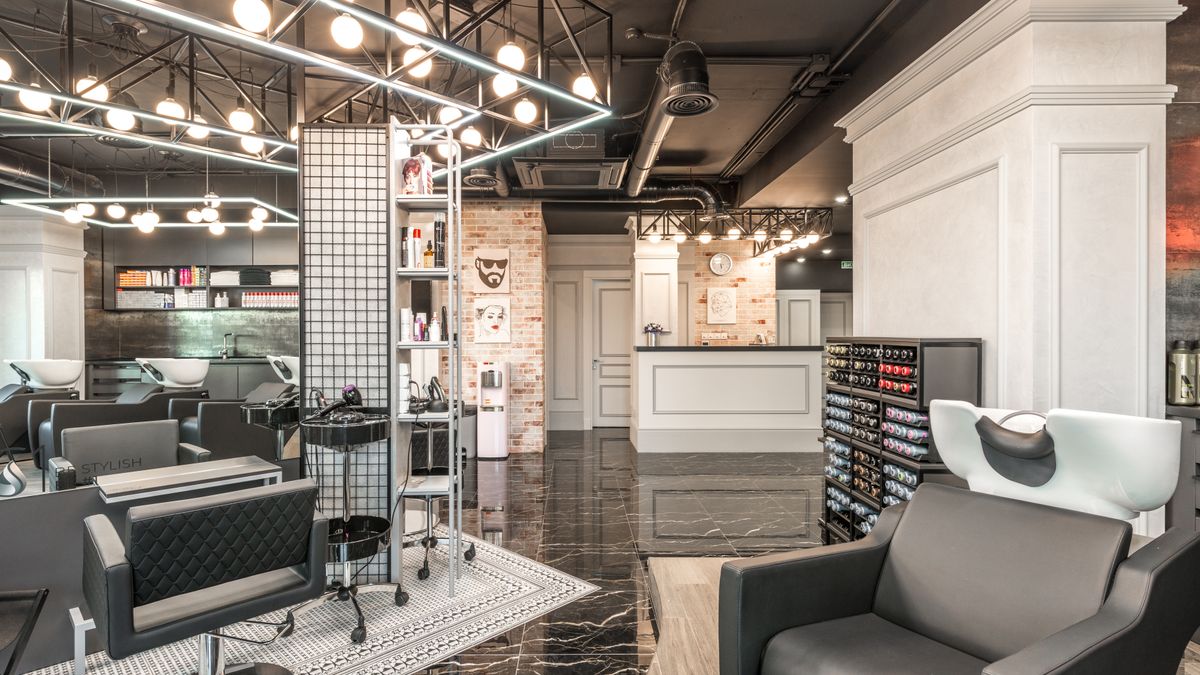
 On screen
A salon, barbershop or spa has a simple growth problem: the chair or treatment room is either booked or empty, and the people most likely to book you are within a short drive of your door. Digital out-of-home (DOOH) advertising, meaning video and static ads on screens in public venues, is one way to put your name in front of those people while they wait, watch and decide. This page walks through how to shape a campaign for new and returning clients. It sits alongside the salons and spas media network page, which covers screens inside the salon itself.
Why new and returning clients need different messages
A person who has never visited you is asking, "Is this place for me, and is it worth the risk?" A person who visited three months ago is asking nothing at all. They have simply not rebooked. One ad cannot answer both, so plan two.
| First-time client | Returning client | |
|---|---|---|
| What they need | A reason to try you and a sense of what the visit is like | A prompt that it is time to rebook |
| Core message | Introductory offer plus a look at the space and service | Seasonal reminder, new service or a time slot that is open |
| Booking step | Short code or link to a first-visit page | Same booking link, with a rebooking code |
| Tone | Welcoming, specific | Familiar, brief |
Running both as separate creative also makes tracking cleaner, which matters later in this playbook.
Build an offer with one booking step
Screens are glanced at, not studied. An offer works when someone can understand it in a few seconds and act on it with a single step. The guide to designing a local offer ad for a screen goes deeper; the salon version comes down to four decisions.
- 01
Pick one service
Choose the service you most want new clients to try first, such as a cut and style, a facial or a first massage. A menu of ten services dilutes the message.
- 02
Decide what the offer is
A first-visit offer, an add-on or a bundle are common choices. Set the terms yourself and confirm you can honor them at the front desk. This page does not suggest amounts.
- 03
Choose one booking step
A short web address, a phone number or a code the front desk recognizes. Pick one. If you want to use a QR code, read when QR codes on venue screens help first, because viewers are often sitting across a room from the screen.
- 04
Add an end date
A clear window gives people a reason to act now and gives you a clean period to evaluate.
For returning clients, the offer can be lighter: a reminder, a new service, or a note about open slots. Keep the same booking step so your front desk is not juggling several.
Target the neighborhoods your clients come from
Salon and spa visits are often local, since many people choose a place close to home or work. That is the idea behind a trade area. CETV Now targeting works by neighborhood, city, metro, zip code, sector or vertical, and individual venue. It can be layered with audience type and time of day.
In practice, start from your own booking records. Where do your regulars live? Which office parks or apartment areas are nearby? Then think about the kinds of venues those people already visit, such as restaurants, fitness and wellness facilities, retail and professional offices. CETV Now runs in these high-dwell commercial venue categories, so an ad can reach people in a place they already spend time. CETV Now reports average dwell time of 15+ minutes across its network, based on its own network data and not third-party audited. Dwell time describes time in a venue, not attention, so write creative that earns a glance.
If you run several locations, you can plan by location. Franchise brands, for example, can let each location target its own nearby venues while following national brand standards.
Plan around seasonal and event peaks
Demand in beauty and wellness is uneven. Build a simple calendar of the moments when people are already thinking about their appearance or about time for themselves, then place your offer a little ahead of each one.
- Weddings and formal events: trials, updos, bridal parties and group bookings. Engaged clients plan well ahead, so your message should start earlier than you expect.
- Holidays: gift certificates, party-ready styling and treatment gifts. The holiday advertising calendar helps you work backward from key dates.
- Back to routine: the weeks after summer and after winter breaks, when people reset schedules and book haircuts, color and skin care.
- The new year: a natural time for fresh starts. Planning begins in the fall, as covered in the January advertising planning guide.
- Local events: proms, graduations, conferences and festivals nearby. See promoting events with in-venue video for the general approach.
For the full year view, the annual in-venue advertising calendar shows how to space these moments so you are not running everything at once.
Show the experience, then ask for one action
People choose a salon or spa partly on feel: the atmosphere, the stylist, how the visit goes. A list of services does not carry that. Creative that shows a result, a calm treatment room or a friendly front desk does more work in five seconds.
- Lead with a clear image of the experience, not text.
- Name your business and neighborhood so viewers know you are close.
- State the offer in a short line and give one booking step.
- Design for sound off, since venue screens are often viewed without audio. See video ads that work without sound.
- Keep a consistent look across new-client and returning-client versions so people recognize you.
CETV Now supports full-screen video, static creative, multi-spot branded campaigns and local offers. Creative can be a 30-second video, static designs, or animated motion graphics shown as overlays on live TV. Full-screen video runs as an unskippable takeover of the venue's live TV. Details are on the ad formats page. Creative is submitted for review before it runs. CETV Now has not published further creative specifications here, so ask the team before you commission production.
Track bookings by code
Screens do not have a click, so you need a way to connect an ad to an appointment. The simplest method costs nothing: give each campaign its own code or phrase and ask at booking, "How did you hear about us?"
- Use one code for first-time clients and a different one for returning clients.
- If you run different neighborhoods or venue types, use a code per group.
- Have the front desk log the code at booking, not at checkout.
- Compare new-client bookings in the flight against the weeks before it, noting seasonality.
CETV Now tracks delivery against its network data, with venue-level impression reporting, real-time statistics and 24/7 campaign monitoring. Results vary by campaign. Codes tell you about appointments, while delivery reporting tells you about exposure. For more on reading these together, see what attribution means. CETV Now reported a 4.2x average campaign ROI and 98% viewer recall across its network. These are reported figures, they are not a promise, individual results vary and no outcome is guaranteed.
Plan a first flight
Ad insertion has no minimums and no long-term commitment. You set your spend and schedule and scale at your own pace, so a first flight can be small and focused. Pricing is quote-based and depends on market, venue category and schedule, and there is no published rate card.
- 01
Choose one goal and one service
For example, new-client bookings for a single service before a seasonal peak.
- 02
Map your neighborhoods
List the zip codes and venue categories where your clients live, work and spend time.
- 03
Prepare two creatives
One first-visit offer, one returning-client reminder, each with a single booking step and code.
- 04
Share your plan
CETV Now asks for your markets, venue categories, creative and budget, maps the plan to real-world audiences, provides a quote and gets the campaign live.
- 05
Review and adjust
Compare codes, front desk notes and delivery reporting, then change one variable at a time.
The small DOOH test campaign guide and the campaign planning checklist can help you structure this, and common first-campaign mistakes is worth a read before you commit. When you are ready, you can reach the team at (833) 807-1500 or info@cetvnow.com, or learn more on the advertisers page.
Figures reflect CETV Now network data and are provided for informational purposes. Individual campaign results vary; no specific outcome is guaranteed.