
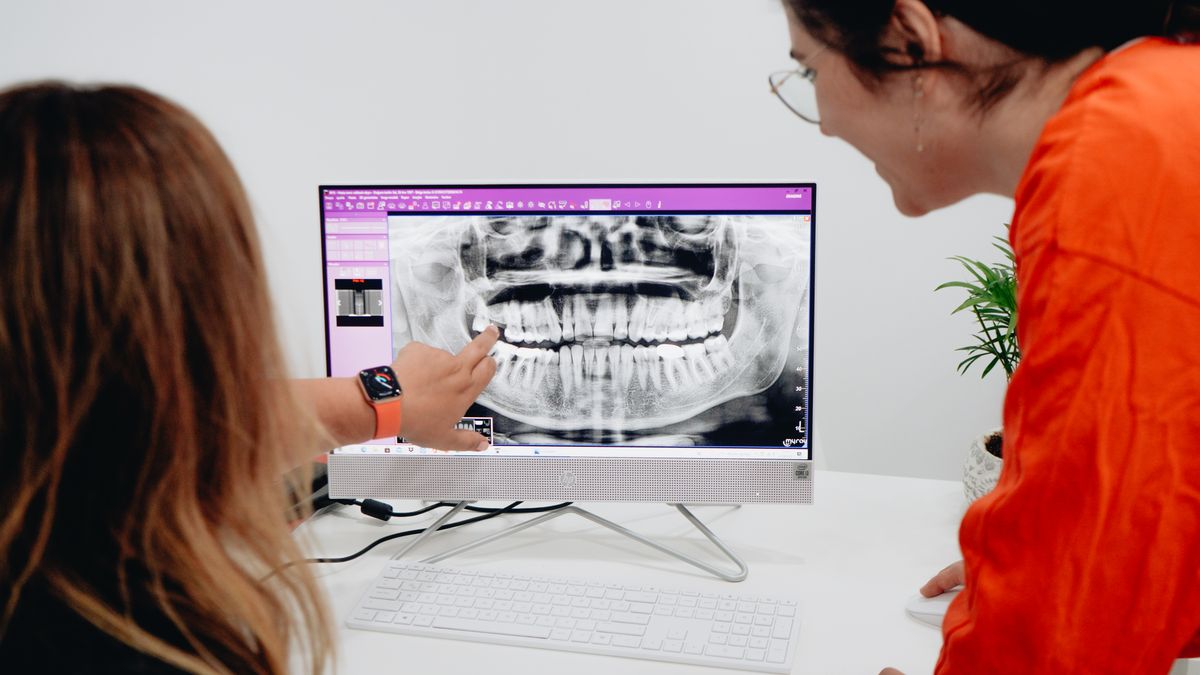
 On screen
Definition
Customer lifetime value (CLV or LTV)
The total amount a customer is worth to your business across the whole relationship, from the first purchase to the last. It can be measured as revenue, but gross profit is more useful for deciding what you can afford to spend to win that customer.
What is customer lifetime value, in plain English?
Most advertisers look at the first sale. Customer lifetime value looks at everything after it too: the next visit, the renewal, the referral, the years of repeat business. If you see "LTV marketing" or the CLV meaning discussed, it is the same idea under two abbreviations.
The concept matters because two businesses can pay the same amount to win a customer and end up in very different places. One earns that money back once. The other earns it back again and again.
How do you calculate customer lifetime value?
A simple version has three inputs. You can estimate each one from your own sales or booking records.
- 01
Find average value per period
Add up what a typical customer pays in a visit, a month or a year. Pick one period and use it consistently.
- 02
Estimate how long they stay
Count how many of those periods a typical customer remains active. Your own retention history is the best guide.
- 03
Multiply, then apply your margin
Value per period times number of periods gives lifetime revenue. Multiply that by your gross margin to get lifetime gross profit, which is the figure to plan spending against.
More detailed models add discounting, churn curves and referral value. For a first pass on a local campaign, the simple version is usually enough to show whether an acquisition cost is in a sensible range.
Why can a dental practice or gym justify a different acquisition cost?
Because their customers keep coming back. Take the same formula and change only how many periods a customer stays. The comparison below is generic arithmetic, not a benchmark for any industry.
| Business type | What repeats | What lifetime value looks like | Effect on what you can spend |
|---|---|---|---|
| One-time purchase business | Nothing, or rarely | Roughly the profit from a single sale | The ceiling is tied to one sale, so spend per new customer has to be small |
| Gym or membership | A fee every month while the member stays | Monthly profit multiplied by the number of months a member stays | Each extra month of retention raises the ceiling |
| Dental practice | Checkups and treatment across many years | Profit per visit multiplied by visits per year, multiplied by years as a patient | A patient who stays for years supports a larger ceiling than the first appointment suggests |
Suppose you decide you are willing to spend a set share of a customer's lifetime gross profit to win them. You choose that share based on your margins, cash position and risk tolerance. The same share of a larger lifetime profit supports a larger spend per new customer, which is the whole gap between the rows above.
This is why a one-time seller may find a given cost per new customer unaffordable while a practice or membership business finds it workable. For the spending side of the equation, see cost per acquisition and return on ad spend.
How does CLV change where you spend?
- It sets a ceiling. If you know what a customer is worth over time, you know when an acquisition cost stops making sense.
- It favors patience. A channel that builds familiarity with nearby customers may be worth testing even if first-visit payback is slow, provided you can wait for the return.
- It shifts attention to retention. Keeping customers longer raises lifetime value and can support a higher acquisition cost without changing your ad budget.
- It separates customer types. A customer who stays for years and one who buys once are different audiences, and your offers may reasonably differ.
Local, repeat-visit businesses often care about being the familiar option nearby. Examples include dental practices, salons and spas and gyms running membership campaigns.
Where does digital out-of-home fit?
Digital out-of-home (DOOH) advertising puts video on screens in real-world venues. CETV Now runs in high-dwell commercial categories including medical and dental offices, fitness and wellness facilities, restaurants and bars, retail, and professional services. Advertisers can target by neighborhood, city, zip code, venue category or individual venue. See what DOOH is for the basics.
Ad insertion on CETV Now has no minimums and no long-term commitment, so you set your own spend and schedule and can scale at your own pace. Pricing is quote-based and depends on market, venue category and schedule. Request a quote to see what a plan would cost against your own CLV math.
How do you tie CLV back to a campaign?
Decide your acquisition ceiling before the campaign starts. Then pick a measurement approach that fits a channel without clicks, such as the ideas in how to measure out-of-home advertising without clicks and attribution. When you are ready to plan, advertisers can start here.