
 On screen
In digital, brand safety usually means keeping an ad away from unsuitable pages, videos or comment threads. Out of home, there is no page. There is a room, a screen on the wall, and a person who is already in a particular frame of mind. For a planner, that moves the brand safety question from "what is next to my ad?" to "where is my ad, and what is the viewer doing there?"
If you want the short definition first, see what brand safety means in advertising. This post covers how it applies to physical venues, using a dental office as the test case.
Why does the room matter as much as the content?
A venue screen is part of a place. The same 30-second spot reads differently in a restaurant dining room than it does in a medical waiting area, even though the creative has not changed. The room sets the mood, the viewer's purpose and what feels like an appropriate message.
Format raises the stakes. CETV Now's full-screen video runs as an unskippable takeover of the venue's live TV. That is a strength for delivery, but it also means the viewer cannot look away from a mismatched message the way they might scroll past a banner. Context fit is something you decide in planning, not something the viewer fixes for you.
Dwell time does not solve this. CETV Now reports average dwell time of 15+ minutes across its network, but that figure comes from CETV Now network data, is not third-party audited, and measures time in the venue, not attention. Long dwell gives an ad more opportunity to be seen. It also gives a poorly matched ad more opportunity to sit badly. For more on the metric, see dwell time in advertising.
What does the dental office test show?
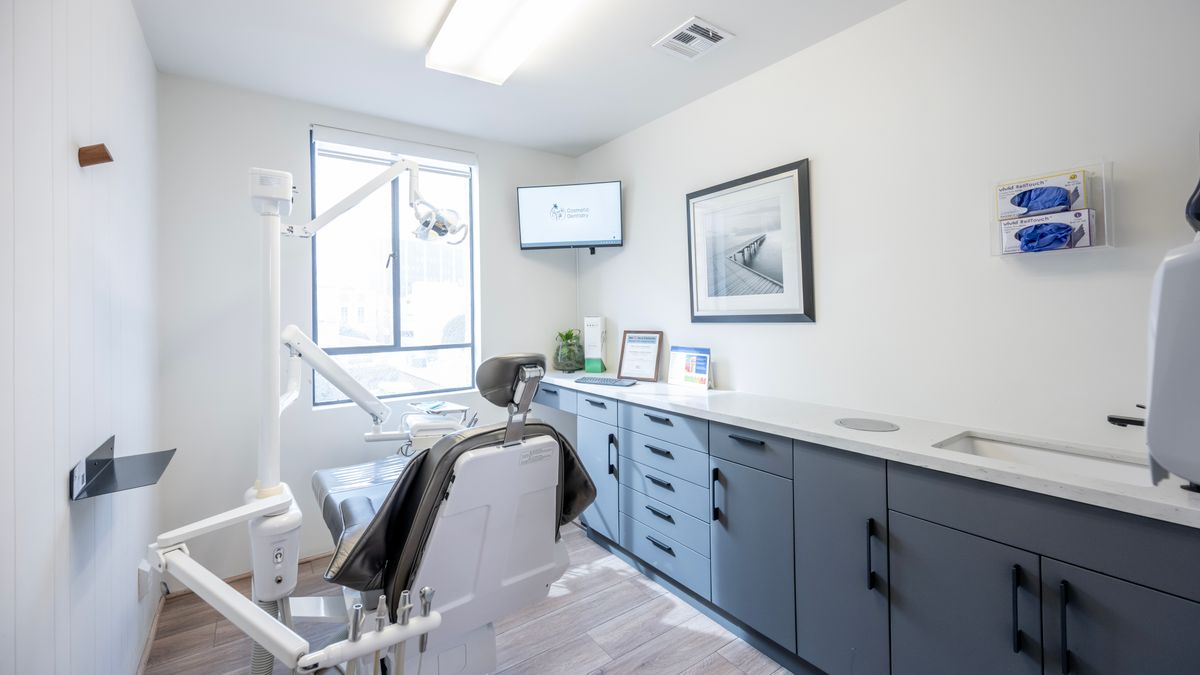
Medical and dental offices are one of the venue categories CETV Now runs in. Picture a dental waiting room. People are there for a scheduled appointment, often a little anxious, often with a screen as the main distraction. That setting is a useful stress test for any brand because it exposes how much of an ad's appropriateness comes from the room.
Some messages fit naturally: a local services brand, a lifestyle product, a community event. Others deserve a harder look. A message built around a sharp tone, a risky claim, or a product that sits awkwardly with the setting may not be wrong in general, but it may be wrong in that room. Regulated advertisers, including those in healthcare, financial services, alcohol and legal, should also check their own compliance rules before choosing any venue category.
The same logic runs in reverse. A brand that looks ordinary in a gym lobby may look different in a bar at night. There is no universal safe or unsafe list. There is a fit between this brand, this message and this room.
How do curated venue categories and creative review work?
CETV Now uses two practices to keep brands in appropriate contexts, and they work at different points in the plan.
- Curated venue categories. Placements run in defined categories: auto dealerships, restaurants and bars, medical and dental offices, fitness and wellness facilities, retail, and professional services such as offices and salons. You choose categories deliberately instead of buying an undifferentiated pool of screens.
- Creative review. Creative is submitted for review before it runs. Review is a checkpoint between your asset and the screen, so the creative is looked at before it appears in a venue.
Programming adds a third layer on the venue side. The live TV your ad sits within is curated and licensed for commercial, public display, covering sports, news, lifestyle and nature content. Venues also have content controls, including automated scheduling of channel changes and brand alignment. CETV Now has not published the detailed review criteria or review timing here, so ask the team for specifics before you build them into a client timeline.
Targeting gives you the planning side of the same control. You can target by sector or vertical, by individual venue, and layer in audience type and daypart. Narrowing by category and time of day is the practical way to keep a brand in the contexts you intended. For the mechanics, see precision ad insertion and contextual targeting in DOOH.
A four-question framework for choosing venue categories
Use these questions in order. They work for any brand, and the examples below are hypothetical, not customer stories.
- 01
What is the viewer doing in this room?
Waiting for an appointment, eating, working out, browsing, or deciding on a purchase. Match the message to that mindset instead of to a demographic alone.
- 02
Does the tone of the creative fit the room?
A light, promotional tone may suit a restaurant or retail floor. A calmer, informational tone may suit a medical or professional setting. Consider whether your creative would feel out of place if it were on the wall of that room permanently.
- 03
Is there a plausible mismatch between the product and the setting?
List the categories where the product or claim could feel awkward, then decide whether to exclude them or adapt the creative. Check your own compliance rules if you are a regulated advertiser.
- 04
Can you narrow by venue, daypart or audience?
If a category fits only at certain times or in certain venues, use targeting to reflect that. A category can be right for a brand in one daypart and wrong in another.
| Hypothetical brand | Categories worth testing first | Context question to settle |
|---|---|---|
| Local home-services company | Professional services, retail, medical and dental offices | Is the tone calm and informational enough for a waiting room? |
| Neighborhood restaurant group | Fitness and wellness, retail, professional services | Does a food offer land at the time of day people are in the venue? |
| Regional auto service brand | Auto dealerships, professional services | Is the offer relevant to someone already thinking about a vehicle? |
| Alcohol or financial brand | Only categories your compliance team approves | Who has signed off on category and creative before the plan is built? |
The table is a starting point for discussion, not a rule. For a deeper walk through category selection, see how to choose venue categories for in-venue ads and how to match your audience to venue moments.
What should you ask before you put a client in a category?
Brand safety claims are only useful if you can check them. Before you commit a client plan, ask the team the questions that matter to your client's risk tolerance.
- Which venue categories are available in the markets in this plan?
- What does creative review look at, and how should we prepare creative for it? (Our creative review preparation guide is a starting point.)
- What can we exclude, by category, venue or daypart?
- What venue-level reporting can we share with the client after the campaign runs?
Some details are not confirmed in what CETV Now has published, including how long review takes, so do not assume them. Pricing is quote-based and depends on market, venue category and schedule, so category choices also shape the quote. Ad insertion has no minimums and no long-term commitment, which makes it practical to start narrow and adjust.
On markets: CETV Now is live in Phoenix, Dallas, Atlanta, Nashville and Salt Lake City, with Miami coming soon. For any other location, availability is unconfirmed, so send an inquiry before you promise a client coverage.
Where to take this next
Start with the client's risk list: categories, tones and moments to avoid. Then draft the category shortlist using the four questions, and pair it with a creative review plan. Agencies can plan across markets and venue categories through a single network partner, with delivery reporting available for client updates. See the agency page for how that works, or the brand safety and creative review FAQ for shorter answers. No outcome is guaranteed, and CETV Now's reported figures, such as a 4.2x average campaign ROI, vary by campaign, so frame them to clients as reported, not promised.
Figures reflect CETV Now network data and are provided for informational purposes. Individual campaign results vary; no specific outcome is guaranteed.